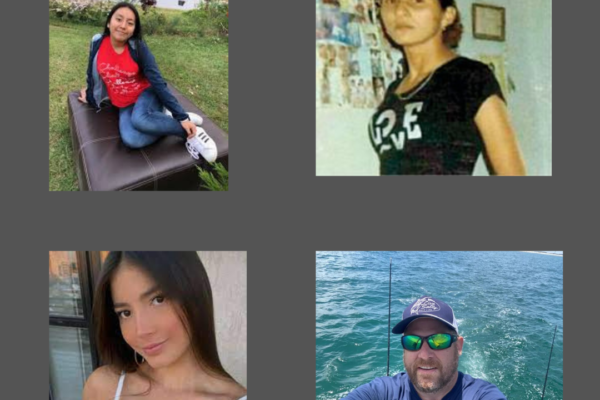
One of North Carolina’s oldest missing persons cases involves a 36-year-old mother and her 4-year-old daughter who disappeared from Carolina Beach, and their extended family has been searching for answers for years. They thought the mystery might have been solved in 2008, but unfortunately, that also turned out to be a dead end.
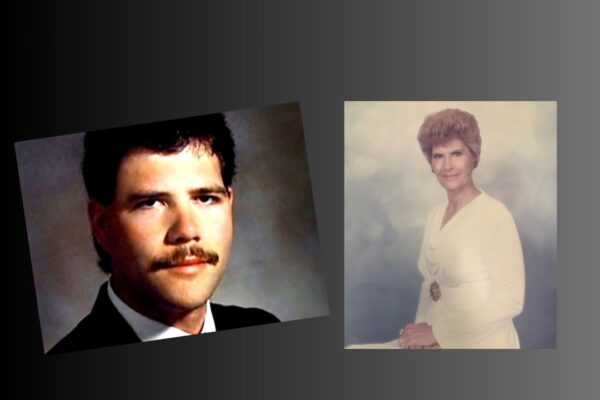
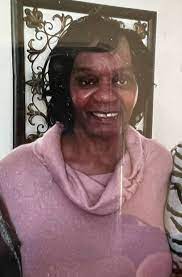
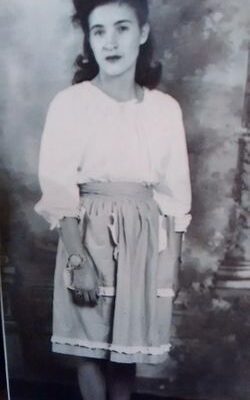
Leila Lewis was working as a nurse in Wilmington when she met a man named Edis Bryan, also known as E.C., who had come into the emergency room while she was working. According to a column that ran in The Charlotte Observer, Leila’s family was against the relationship from the beginning. Probably because E.C. had come into the emergency room with gunshot wounds from what some rumors said were an “irate husband.” Nevertheless, they were married and had a daughter named Mary Rachel together. But on the night of May 10, 1941, Leila and Mary Rachel disappeared after leaving their home. Below is what E.C. said happened.
A Late-Night Errand
They had eaten E.C.’s favorite meal for dinner, roast beef and potatoes. Around 9 p.m. Leila left in their Black 1935 Model A Ford Coupe to run an errand in town. She took 4-year-old Mary Rachel with her, but they never returned. E.C. reported them missing. Police began an extensive search in New Hanover County with a private plane, and they dredged up inlets in the Cape Fear River. Police suspected E.C. Bryan was behind the disappearance of his wife and daughter. On the day they went missing, E.C. was building wooden forms that could hold concrete that were to become a new bedroom and bathroom addition on their house. Leila’s family suspected she and Mary Rachel had been buried beneath the house.
Because there was no physical evidence linking the husband and father to a crime, police could not get a search warrant to search the property. The mother and daughter were declared legally dead in 1948. Their car was never located. E.C. remarried, moved to Florida, spent time working in real estate, and then passed away in the late 1970s. In 1971, Leila Bryan’s nephew, Lewis Smith, the son of her sister Bessie, took on the role of advocating for his aunt and cousin. What he hoped to do was find someone who would be willing to use a ground-penetrating radar at the former home of the Bryan’s on Raleigh Avenue in Carolina Beach. But the cost deterred him.
An article that ran in The Charlotte Observer back in 2008 stated that the police had heard a false confession a few decades ago, but the bones they found were not tied to Leila or Mary Rachel.
In 2008, Ron Crowson of Geo Solutions in Raleigh, volunteered his time and equipment to the cause. A sweep of the ground beneath the family’s house revealed three different suspicious places, one under the living room, kitchen, and under a bedroom. They appeared to be beneath a 4-inch slab of concrete, and 24 to 30 inches below the surface. Crowson said those irregularities could have been anything from construction debris beneath the home to layers of soil shifting from the sand. To explore further, they would have to remove floor tile in the home and cut into the concrete. The homeowner at the time, a man named Ken Florence, said he would be willing for investigators to explore further underneath the home.
He said Carolina Beach residents had all grown up hearing the story of Leila and Mary Rachel’s mysterious disappearance and wanted to help the family find answers. According to information found on The Charley Project, a few months after the radar scan, investigators did cut away pieces of the from the home’s basement and dig underneath in search of human remains, but nothing was found, and the home was ruled out as a burial site.
At the time they went missing, Leila stood five feet seven or five feet eight inches tall and weighed around 120 pounds. She was a Caucasian female with black hair and gray eyes. She was reportedly wearing a summer print housedress, brown and white shoes, a green turban, and possibly a sweater. Rachel was a Caucasian female with brown hair and brown eyes. She stood three feet tall and weighed around 40 pounds. Her birthdate was May 10, 1941. Anyone with information on this case should contact the North Carolina State Bureau of Investigation at 910-486-1262.
Gloria Kim Smith
A young girl named Gloria Kim Smith went missing in 1988 from Brunswick County and has also never been found. I had never heard of this case but saw it mentioned in a Wilmington Star News article titled “At Least 24 missing persons cases remain open in Cape Fear Region.”
On June 25, 1988, 8-year-old Fayetteville resident Gloria Kim Smith was visiting Long Beach with her uncle Ki Chul Kim. They had made the trip to meet up with other family members so they could go fishing. She was last seen playing on the beach at the King’s Lynn area. Her 18-year-old female cousin was watching Gloria but fell asleep on the beach. When she woke up around 30 minutes later, Gloria was nowhere to be found. Boats and a helicopter scanned the beach looking for the young girl that day, and the next day, more than 200 volunteers, firefighters, rescue workers, and police officers searched the area for Gloria, but turned up no leads. Police began to wonder if they weren’t looking for a drowning victim but rather one of a kidnapping.
In July of 1988 The Charlotte Observer reported that a psychic from New Orleans had volunteered his services to assist in finding Gloria. Police took him to the site where she disappeared, and he said, “I feel the child is still alive.” He then asked to sit alone in the spot on the beach and meditate. This psychic had been recommended by a police sergeant from New Orleans, who told the local newspaper that he felt the psychic was authentic. However, based on the fact that Gloria was never located, the psychic, who said he believed his gifts were “God given,” and he considered himself “the next step down from a prophet,” was unable to provide details as to her possible whereabouts. The last newspaper article in 1988 I could find about Gloria ran in The News and Observer on November 9.
The Associated Press ran a wire article that interviewed Gloria’s adoptive father, Lloyd Smith, who owned a diner in Fayetteville at the time. He said because Gloria couldn’t swim, the family believed at first she had drowned. But after watching the shoreline get dragged for three or four days with no sign of his daughter, or any of her clothing, he had second thoughts. The police detective assigned to the case at the time agreed. “My personal opinion is yes, she’s alive,” Detective Dan Holland told the press. “I haven’t found a body, and until I do find one, she’ll be alive. The child could have drowned, but something should have turned up.”
However, a man named John Goad, who worked on the case for the North Carolina Center for Missing Children, disagreed. He said, “She was last seen in water about shoulder deep in a fairly unsupervised area. We also determined that the current was such and the area was such that it would be very likely or possible that the body would not surface. There is a very good chance that she would have been carried out to sea.”
Gloria Kim Smith is half Korean and at the time of her disappearance, stood around four feet tall and weighed 60 pounds. She had short brown hair and brown eyes. She was wearing a white tank top and dark blue shorts. Anyone with information on this case can call the Oak Island Police Department at 910- 278-5595.
Brian “Neil” Hooks
A man named Brian “Neil” Hooks went missing from the Myrtle Beach area of South Carolina in the late 1980s and his case remains unsolved.
In September of 1988, 21-year-old Brian “Neil” Hooks went missing from the Florence area of South Carolina. According to an article that ran in the Florence Morning News, his sister Amy Turner said Neil had gone by their parents’ house and said that he and his live-in boyfriend were going to the beach for the weekend. He said he’d call them when he got back. They never saw him again. According to the facts share on The Doe Network website, Neil’s cousin saw him at a club that night. Neil asked his cousin if he could spend the night at his place, but because this relative had just moved and he hadn’t unpacked yet, there wasn’t a place for Neil to sleep. Later that night, a roommate of that cousin shared that Neil was scared and thought his boyfriend was going to hurt him.
Amy Turner said she called Neil house and asked to speak with him, but roommate living in the home said there was no one there by the name of Neil and hung up. She called back and asked to speak to her brother’s boyfriend. He said Neil had run off and hadn’t told anyone where he was going. Amy and her family knew that didn’t sound like Neil—he had always kept in touch with their mother and wouldn’t have ceased all communication that way. They went to the Florence County Sheriff’s Department to file a missing persons report. An investigator there worked the case until the leads went cold. He had suspected foul play, and even a identified a person of interest in the case, Neil’s boyfriend at the time, but was unable to collect any concrete evidence about the whereabouts of Brian Neil Hooks.
In 2011, Neil’s father passed away, and his daughter made a promise to him that she would continue searching for her brother. She reached out to the Sheriff’s Department to see if they would take another look at the case. Lt. Glen Kirby took over the case and began interviewing people, including some who were in jail with the person of interest at one point. He said in the early 2000s’, they had received information that Neil’s remains might be buried near Willow Creek Road, which was where Neil had last resided. They searched and excavated an area but were unable to find any evidence. The family of Neil Hooks have come to terms with the fact that he is likely dead, but they still want closure. His sister told the Florence Morning News, “This has been really, really hard, not knowing anything all these years. We want his remains. We want to give him a proper burial and have a place where we can go and talk to him and feel close to him. We want him home.”
At the time he went missing, Brian Neil Hooks stood about five feet seven inches tall and weighed around 140 pounds. He was possibly wearing a t-shirt and jeans. He had sandy hair and blue eyes. He had a scar on his left wrist, and a tattoo of a cross on his left shoulder. His front teeth were in bad shape and had started to decay. Anyone with information on this case is asked to call the Florence County Sheriff’s Office at 843-665-2121 or the state Crime Stoppers hotline at 888-274-6372.
Enrique Roman Martinez
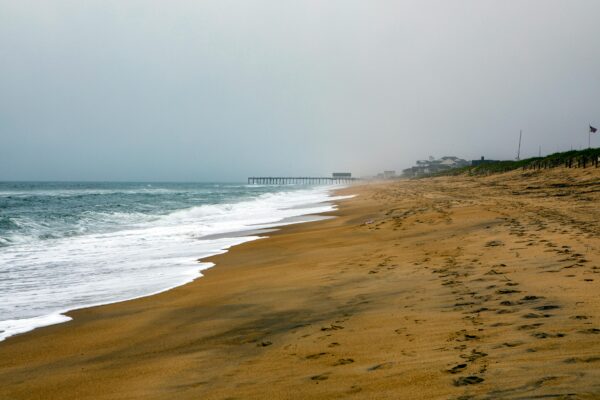
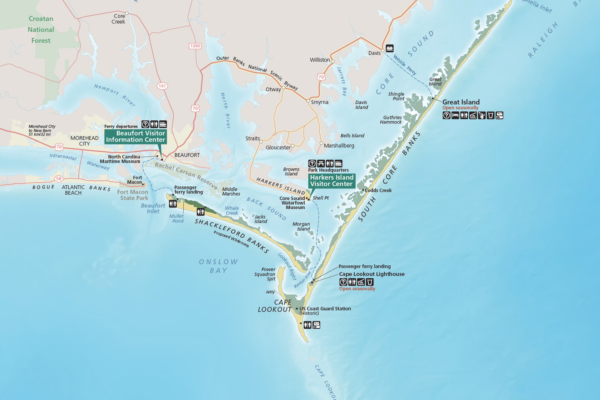
On Memorial Day weekend in 2020, a U.S. Army soldier stationed at Fort Bragg went missing while on a camping trip at the Cape Lookout National Seashore on the southern Outer Banks of North Carolina. Enrique Roman-Martinez, age 21, was from Chino, California and served as a paratrooper with the 82nd Airborne Division. He had joined the Army at age 17, attended airborne school in Georgia, and worked as a human resources specialist at Fort Bragg. During his time in the service, he received an Army Good Conduct Medal, the National Defense Service Medal, Global War on Terror Service Medal, Army Service Ribbon and the Army Parachutist Badge.
Enrique had joined seven other campers on this camping trip at the last minute. At the time, they were violating the COVID-19 restrictions banning travel off the base. The first night they were on Cape Lookout, it rained heavily. The next day, May 23, Enrique’s fellow soldiers reported him missing. They later told authorities they last saw Enrique around midnight the night he disappeared from the campsite. He had left behind his glasses, phone, and wallet in his tent. The soldiers ran into a park ranger asking them to move their vehicles away from the sand dunes the day Enrique went missing, but they didn’t mention anything about having a missing person in their group. Instead, Specialist Alex Becerra called 911 approximately 17 hours after he was last seen, told the dispatcher Enrique had suicidal tendencies, and they hadn’t been able to find him.
The search for Enrique included The National Park Service, Army Criminal Investigations Division, Wayne County Sheriff’s Office and their canine team, the U.S. Coast Guard, N.C. Marine Patrol and the Carteret County Sheriff’s Office.
A week after Enrique vanished, a severed head washed ashore on Shackleford Banks, close to where the soldiers had been camping. The head was later identified as belonging to Enrique Roman-Martinez, and a medical examiner said the death appeared to be a homicide. There was evidence of multiple chop injuries of the head, and Enrique’s jaw had been broken in at least two places. They could not determine a cause of death because the rest of the body was never found. Enrique’s family doesn’t believe he would have gone swimming in the water given the storms that weekend, nor do they believe he was suicidal. Enrique was on his way out of the Army and was planning to use the G.I. Bill to go to college. He wanted to buy a new car and travel.
The battalion commander of the 37th Brigade Engineer Battalion of the 82nd Airborne Division waited until Monday morning to inform the Army Criminal Investigation Division that Enrique was missing, and his barracks were not secured until almost a week later. Allegedly, one of the seven campers who had been with Enrique entered his room before it was locked down, according to an article that ran in Rolling Stone magazine. A journal that Enrique kept, was not found with his belongings, according to his sister.
One of Enrique’s friends from California, Christian Romero, who was also serving in the Army and stationed at Fort Bragg, told Rolling Stone Magazine he didn’t understand why Enrique would have gone on the trip given the weather forecast and the nonstop rain. The ferry back to the mainland had stopped operating. Enrique was miserable and wanted to go back to the base. His tent toppled over while they were setting up camp and he allegedly walked away from the site. This friend had heard this from the soldiers who were on the trip with Enrique. They said he had last been seen wearing a pair of blue shorts and no shirt. Griselda Roman-Martinez, Enrique’s sister, said her brother could not see without his glasses and wouldn’t have left those behind in his tent.
Christian Romero said Enrique was known to have taken LSD and hallucinogenic mushrooms, and Griselda confirmed that. She said her brother believed they were therapeutic for mental illness. Did LSD have anything to do with what happened on that camping trip and Enrique’s death? No one else was talking.
In November of 2021, a spokesman for the Army Criminal Division spokesman said while Enrique’s case is not closed, it has moved into cold case status.
Four of the soldiers on the trip, Sgt. Samuel Moore, Becerra, Specialist Joshua Curry, and Specialist Benjamin Sibley, faced courts-martial for non-violent charges.
An attorney for the Roman-Martinez family told Rolling Stone Magazine that the Army CID believes Enrique was murdered by one or more of the soldiers on the camping trip, but they don’t have enough evidence to charge anyone in the homicide.
According to an article that ran on the website Military.com, as of January 2023, Moore, Becerra, and Curry had pleaded guilty to various conspiracy and false statement charges, received reductions in rank, and were dismissed from the Army, according to a spokesperson for the 82nd Airborne Division at Fort Bragg. Specifically, Becerra was convicted of three counts of disobeying a superior officer and one count of wrongful use of a controlled substance. Sibley was convicted of conspiracy to commit a false statement and making a false statement and was reduced in rank. He is no longer serving in the Army.
Private Annamarie Cochell and Private First Class Samad Landrum were granted immunity in exchange for their testimony at Becerra’s court-martial. Each admitted in advance of their testimony that the deal they made included just 30 days of confinement and that the charges wouldn’t be reflected in their records. They were also charged with wrongful use of LSD.
The Department of the Army Criminal Division is offering a reward of up to $50,000 for credible information leading to the identification, arrest, and conviction of the individual or individuals responsible for his death. Anyone with information regarding the death of Enrique Roman-Martinez can contact the Army CID Carolinas Field Office at 910-391-4911. Persons wishing to remain anonymous will be honored to the degree allowable under the law and information will be held in the strictest confidence.
Crystal Faye Todd
And the last case from our podcast files involves the murder of 17-year-old Crystal Faye Todd, who was living in Conway, South Carolina, not far from Myrtle Beach. Her case was all the more disturbing because she was murdered by a person she and her family both trusted.
On November 16, 1991, Crystal Faye Todd from Conway, South Carolina failed to return home after a night out with friends. The last time anyone remembered seeing her was around 11 p.m., in the parking lot of the nearby Coastal Mall. The next morning, her car, a metallic blue 1991 Toyota Celica with the personalized license tag “C TODD” was found in the parking lot at the Conway Middle School. Her purse was still inside.
The next morning, two deer hunters came across a mutilated body in a ditch off a dirt road in Horry County. It was Crystal Todd. An autopsy revealed a shocking crime. The vivacious and petite Crystal had been stabbed more than 30 times, and there were signs of a brutal sexual assault. One of the stab wounds had crushed her skull and another entered her brain. Out of respect for the victim and her family, I won’t get into the exact details of the rape and murder; you can read all those details in the newspaper articles published at the time.
But I will say that it was evidence this crime was violent, with signs of overkill, and the perpetrator degraded the young woman’s body in every way he could think possible before leaving her on the side of the road. Crystal’s mother Bonnie told police right away that the killer had to be someone her daughter knew, because Crystal wouldn’t have gotten into a car with a stranger and left her own vehicle behind.
Police worked to retrace Crystal’s steps on the night she disappeared. They knew at 7 p.m. she had left a birthday dinner for her grandmother in the Toddville community. At 8 p.m. she stopped by the Coastal Mall parking lot to speak with a friend. Around 9 p.m., she and a friend left the mall. They went to a party in the Punchbowl area, which they left around 11 p.m. By 11:20 the two were back in the mall parking lot, which Crystal left alone. An eyewitness saw her car parked at the Conway Middle School around 10 minutes later. Within the first few days of the murder, police had interviewed more than 100 of Crystal’s friends and family members.
Immediately, rumors began spreading around town that Crystal’s murder was related to satanic rituals, most likely due to the severity and number of her stab wounds. Police worked quickly to tell the public they had no evidence that Crystal’s murder was ritualistic. Within a week, though, they did release a statement that they believed there was more than one killer involved. Her mother told the Sun-News in Myrtle Beach the following: “I tell everyone to be careful because there’s a maniac still out there. We don’t know who that devil is. If they don’t catch him, he’s liable to get somebody else.” A $10,000 reward gathered by Horry County and Crime Stoppers was offered to anyone with information leading to an arrest.
After the first few months, investigators decided to try something different. They took blood and saliva samples from about 50 males that were acquainted with Crystal in and tested them against blood and semen found on Crystal’s body. They also collected head and pubic hair samples, fingerprints, and palm prints. One of the men they took samples from, 18-year old Johnnie Kenneth “Ken” Register, had dated Crystal in the past and remained close friends with her. He had even served as a pallbearer at her heavily-attended funeral. Ken expressed to Bonnie Todd that he was afraid he would be framed for murder. She told him he was innocent, so he had nothing to worry about. In fact, he had often stopped by her home and asked her about the investigation into Crystal’s murder, always offering her a hug before he left.
It turns out, Crystal’s mother was wrong and had been fooled by a killer. DNA testing had matched Ken’s DNA with the DNA in semen found in Crystal’s body. He also had the same blood type as the killer’s. The Medical Examiner had determined that Crystal had been raped in the same time period she had been killed. When police had questioned Register after the murder, he had told them he hadn’t seen Crystal in three or four days, and that he’d never had sex with her, even though they dated for a brief time.
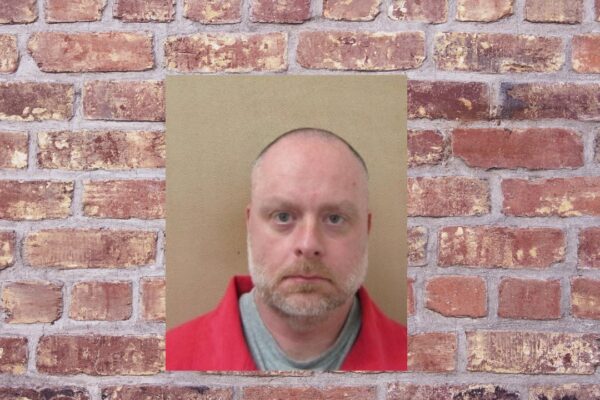
On February 18, 1992, police in Horry County arrested Ken Register and charged him with murder and first-degree criminal sexual conduct. He was on a job site as a construction worker at Garden City Beach when he was arrested. During a discussion with police, in which they read him his Miranda rights, he confessed to the murder once they told him what evidence they had collected implicating him.
The young man’s arrest confirmed the theory that Crystal had known her killer, and they told the public they had no plans to arrest in anyone else in the rape and murder.
Ken was remembered as a good student and football player at Conway High School. He was also a member of the Future Farmers of America club during his freshman year. He was described by classmates as quiet and laid back, and many people believed police had arrested the wrong man. At the time of his arrest, he was dating a young woman at a nearby high school and was often seen accompanying her at events there.
Supporting a Killer
Ken Register’s trial began in Conway in January of 1993. The media pointed out that it was an unusual trial because of the amount of young adults scheduled to testify. Out of the more than 100 witnesses, 50 or 60 of those were teenagers who had known both Crystal and Ken because they had the same circle of friends. Many students openly voiced their opinions that Ken was innocent and attended the trial in support of him.
What they didn’t know prior was that Ken Register’s inappropriate and sexually-driven behavior had been escalating for years. When he was a juvenile in 1988, he had made hundreds of obscene phone calls to a local female teacher. And the year Crystal was murdered, he was arrested for masturbating in front of two female students at Coastal Carolina University.
Sheriff John “Teddy” Hendry arranged for walk-through metal detectors to be placed at the courtroom’s doors for extra security. The prosecutor for the case, Solicitor Ralph Wilson, had been getting threatening phone calls at his residence, some of which his children answered.
The trial was the first legal test of the State Law Enforcement Division Laboratory that examined the DNA for Horry County police.
Ken took the stand in his own defense, and by all accounts, showed no emotion as he looked at Crystal’s blood-stained clothing and photographs of the crime scene.
Disrupting the Trial
These threats to the prosecutor for the case had continued all throughout the trial, including during the time the jury was out for deliberation. A witness standing outside overheard someone use a racial slur, as Solicitor Ralph Wilson was Black, and said he was going to kill him before the end of the night.” That witness alerted the Conway police. Wilson said in all his years as a prosecutor, he had never received any threats. One call that came in said Wilson would be harmed as he walked across the street from his office to the courthouse. He had to be escorted during that trip by armed guards. The crime of threatening a court official is a felony and can carry a maximum of five years in prison.
In fact, dozens of law enforcement were on guard at the courthouse during that time, as the Crystal Todd murder trial had drawn one of the biggest crowds the courthouse had seen in years.
I read in a later article that police had been able to pinpoint a particular home the calls were coming from, but it belonged to a family, and they couldn’t determine which family member was making the calls. I’m not sure if they ever arrested anyone for the threats, but if I had to guess, I’d say it was a close friend or family member of Ken that was making the threats.
The jury found Ken Register guilty of the rape and murder of Crystal Faye Todd on January 22, 1993, after deliberating for almost five hours. Crystal’s mother Bonnie later told the media that she was surprised at the way Ken stared at the jury after the verdict was read. “You could see the devil coming out of his eyes,” she said. “I’ve always wondered what was in his eyes, now I know it was the devil.”
After the guilty verdict, Bonnie Todd visited her daughter’s grave and told her about Ken getting convicted. “I wanted to tell her they found him guilty,” she told the press. “I stayed about a minute. I just felt glad.”
Ken Register was given several life sentences for his crimes, but he has still been eligible for parole due to an old state law. He is serving his sentence out in the Broad River Correctional Institution in Columbia.
On February 19 of this year, Ken Register was denied parole for the third time. Before his parole hearing, Crystal’s family put together an online petition and asked the public for help in keeping Ken Register behind bars. The petition received more than 5,000 signatures. While her family says it is difficult to relive Crystal’s murder every two years when her killer is eligible for parole, they will continue to fight to keep him in prison.