The North Carolina mountains are a beautiful place to visit, but we’ve had many occurrences of people getting lost on hikes or getting injured or falling off treacherous spots or overlooks. In Episode 105, I shared the story of a group of hikers who got lost outside of the Linville Gorge, a hiker who fell to his death off a trail called Rock Trail, and a woman named Frances Apperson who went missing in 2022 after hiking in the same area. Frances has since been declared dead, but her body was never found.
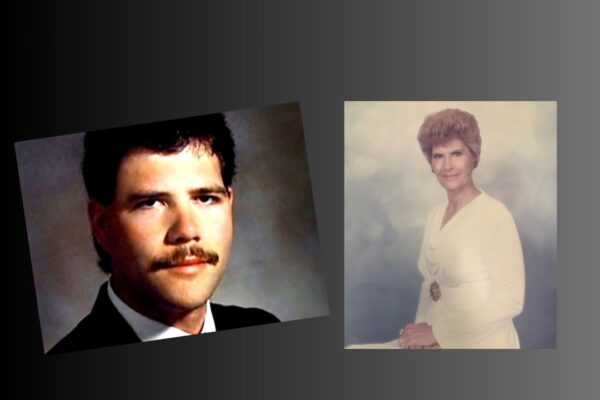
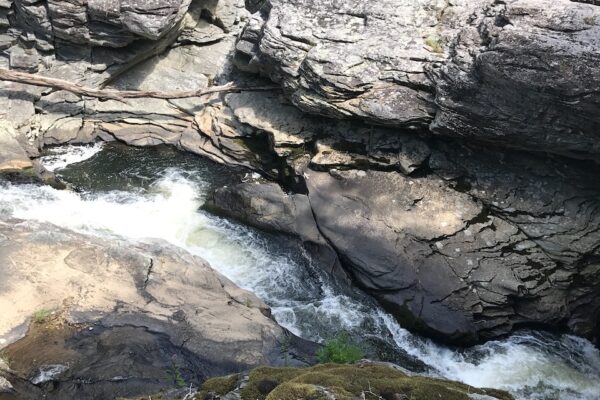
When park rangers were notified of a possible fall back in October of 1988, especially off Chestoa View, they probably weren’t surprised. The overlook rests atop a 1,600-foot-drop into the gorge below. It’s an isolated area, but visible to passing cars. To get to the overlook, one must park in a secluded lot, then walk down a winding stone path. It’s a gorgeous spot, but not somewhere to be “horsing around,” which is what James Gibbs said his wife and friend were doing when they fell.
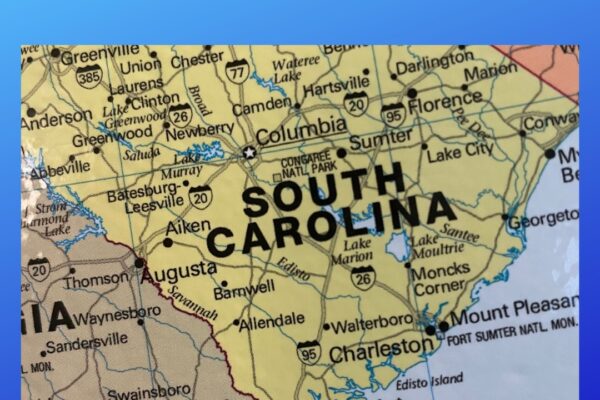
James and Helen Gibbs were from Fayetteville, and Susan Haire was living in Ladson, South Carolina at the time of her death. The deaths occurred around 8 p.m. that Monday. According to James, the three had gone to the overlook so they could take a few sunset photos. They were vacationing with their three children ranging in age from 13 to a toddler, and Susan’s two daughters, ages 13 and 2. The children were waiting for the three adults back in Spruce Pine at the Skyline Motel.
The initial media reports quoted park ranger Russ Whitlock as saying, “He turns around, leans down to pick up his tripod and camera. He hears a commotion behind him and by the time he turns around his wife and the good friend of the family are already down over the overlook, falling.”
James said the two women were messing around on the two-foot stone wall surrounding the overlook and when he turned around to pick up his camera, they must have fallen. James said he climbed over the overlook to help them, and blacked out until hearing generator motors from the rescue party a few hours later.
Strange Noises in the Night
So how did the forestry service know that an accident had occurred in the first place? Two men from Illinois and Indianapolis vacationing in the area stopped at the Chestoa View overlook around 7 p.m. that evening. They walked down the trail with flashlights, and found a camera bag and tripod on the last step leading to the overlook. They immediately grew suspicious. As they used their flashlights to scan the immediate area, they heard a woman’s voice call out, “Oh, my arm,” and then a man’s voice. The men, Mike Mallory and James Manning, got into their car and drove 10 miles south of the overlook, to Gillespie Gap, where they told a park ranger about what they had seen and heard.
Rescue crews discovered the body of Helen Gibbs around 3 a.m. on October 18, about 400 feet below the overlook. Her body was found directly below Susan’s. Around 3:05 a.m., the rescuers heard James Gibb shouting for help. They reached him around 4:50 a.m. and treated him for his injuries. He asked one of the people helping him to call the hospital and inquire about his wife’s condition, and to “tell her that he loved her.” He had not yet been told his wife and her friend had been found deceased.
But as investigators looked more into the two women’s deaths, the more suspicious they became of James Gibbs. They noticed he only had minor injuries and suspected he may have fallen only 10 to 20 feet as he tried to climb down the cliff beneath the overlook. Also, James said the group went to the overlook to take sunset photos with his camera. But, the overlook faced east, making a sunset photo impossible.
Suspicions Raised Over Two Deaths
Jack Knowles, a Fayetteville insurance agent for the Woodmen of the World Organization, told the media he had contacted the U.S. Marshals Service about Helen’s previous injuries from her husband on October 21, because he feared a “less than sufficient investigation” into their deaths. He said he had received information about Helen’s hospital visit from “people who knew the Gibbs family,” but would not specify who they were.
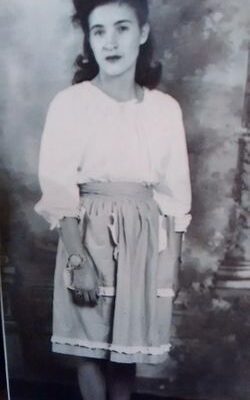
Helen Gibbs grew up Helen Burnette in Robeson County, the fifth of seven children. She was studying nursing at the Fayetteville Technical Institute in 1978 when she first met James Gibbs. In fact, it was her friend Susan Haire who introduced the two. James worked as a factory worker at the Springfield Tire Company in Fayetteville. Helen was a single mom when the two met, raising a four-year-old son from a previous relationship. After she and James married, they had two more sons, ages 1 and 7 at the time of her death.
Eventually Susan Haire had moved to South Carolina, taking a job in the maternity ward at Trident Regional Medical Center in Charleston. She taught Lamaze classes and had two daughters, ages 13 and 2. At the time of her death, she was single.
James Gibbs Indicted
On November 8, 1988, a McDowell County grand jury returned two murder indictments against James Clifton Gibbs. The McDowell County Sheriff Bob Haynes said James and Helen had been having marital difficulties at the time of her death and that he stood to cash in on a $100,000 life insurance policy Helen had taken out on herself in the summer of 1988. James told investigators he didn’t know about that policy—that he only knew about a $50,000 policy she had through the Army Reserves. The News and Record reported that at the time of these indictments, a superior court judge ordered the release of Helen’s treatment records from Cape Fear Valley Medical Center in Fayetteville, North Carolina. These records were related to a visit she made to the hospital on August 22, 1988. Prosecutors also issued a subpoena for Cumberland County Mental Health, Division of Adult Services records and “tape recorded or written statements” made by Helen Gibbs.
Physical Abuse Allegations and a Marriage on the Rocks
Once these hospital records were released to the public in mid-November of 1988, they did not paint James Gibbs in a good light. Helen had visited a Fayetteville hospital in August and told the medical professionals who examined her that James had burned her with a what she thought was a cattle prod at their home. She was treated for multiple burns. The reason why James burned his wife with the cattle prod was because he was trying to get the name of a local doctor she’d had an affair within the past. After the incident, he went to Helen’s sister, Catherine Locklear, and provided her with a tape he’d recorded of a conversation between Helen and Susan Haire. He confessed he’d secretly recorded the phone call because he was looking for information about his wife’s affair.
A detective with the McDowell County Sheriff’s Office, Robert Smith, said he’d spoken with a co-worker of James. This co-worker had ordered two books from the police science section of Paladin Press and given them to James. The titles were
Crime Scene Search and Physical Evidence” and “Never Say Lie,” a publication focused on administering polygraphs and how to manipulate the machines. These publications were later found during a search of James’ home. He’d asked another co-worker about stun guns and how they worked. He told other co-workers that he was looking for a “hit man” on behalf of a friend who wanted to kill his wife. James said this friend was willing to pay up to $10,000 for the job.
Because the deaths of Susan and Helen seemed accidental at first, their bodies did not undergo autopsies. In early December, 1988, a superior court judge ruled the two women’s bodies could be exhumed to determine the nature and extent of their injuries. Helen was buried at a cemetery in Robeson County and Susan in Cumberland County.
In late December, a judge denied bond for James Gibbs for the second bond. He was ordered to remain in jail until his trial, which was moved from Marion to Newton due to the publicity.
The Trial Begins
On June 6, 1989, the trial began in Newton, North Carolina. District Attorney Alan Leonard said James Gibbs had a secret plan to push the women to their deaths on October 17, 1988. He believed Helen was having an affair with another man, and he blamed Susan and didn’t like that she knew the intimate details of their marriage. He announced they would be seeking the death penalty for James.
A social worker testified that Helen’s family tried to convince her not to file for divorce from James in May 1989. At the time, Helen’s mother had no idea James had burned Helen with what turned out to be a stun gun. James was emotional during the opening arguments and wiped tears away from his face a few different times. His defense attorneys told the jury that Susan Haire had been suicidal at the time of the women’s deaths.
Helen Gibbs’ mother testified that she talked to her son-in-law by phone after he’d been arrested. She asked him to tell her what happened. He said, “If Helen had told me that her affair had been over for eight months, then this thing never would have happened.”
In January of 1988, Helen and James had sought out marriage counseling at the Cumberland County Mental Health Center for counseling. She went back alone in May of that year for another session. She told the counselor she was unhappy in the relationship, and felt there was a lack of affection on the part of her husband. He in return felt that his wife didn’t love him anymore and that they were only staying together because of their three children.
The jury heard the testimony of a woman named Loretta Coleman, who worked with Helen at the VA hospital in Fayetteville. At the time, Helen was the head nurse of the cardiology/neurology ward. While the two women were sitting in the hospital cafeteria in August 1988, Loretta noticed burn marks on Helen’s chest that she couldn’t conceal. When she probed further, Helen admitted her husband had burned her with what she thought was an electric cattle prod. Upon further examination, a doctor determined Helen had been burned more than 50 times on her torso, arms, legs, and neck. She said James had held her down on their bed and forced her to confess about the affair, which had ended in December 1987.
After attacking Helen with the stun gun, James had moved out of the family home for about a week. Helen worked with a lawyer to draw up a separation agreement. But after about a week, she called the attorney back and asked him to drop the proceedings. She said she wanted to give the marriage another try for the sake of their children.
James’ defense attorneys wanted to play a taped recording for the jury, which would have shared a conversation between Helen and Susan where Helen said she knew James would fight her for custody of their three sons if she left him. The judge in the case would not allow that tape to be played.
James and Helen had vacationed in the mountains annually during their marriage, and for three years, Susan Haire and her children had gone along with them. But Helen was nervous about the October 1988 trip. While James had moved back into their home, the two were sleeping in separate bedrooms. Helen told friends she was afraid to go on the trip because she would have to share a bed with James.
James Manning, the visitor from Indiana who’d reported his findings at the overlook the night Helen and Susan died, testified about hearing a man and woman’s voice as he turned his flashlight on over the gorge. He said the woman seemed to be screaming as loudly as she could, and then it trailed off in intensity, as if it was getting farther away.
Detective Robert Smith testified that he’d initially requested an autopsy be performed on both women. He didn’t learn they hadn’t been performed until he received the report from Dr. Dorwyn Croom. Croom told the court he didn’t perform the autopsies because he’d been told the deaths were accidental.
Conflicting Stories
The detective said there was at least a quarter inch of dirt underneath Susan’s fingernails when her body was recovered, and plans had been uprooted just above the ground where she was found. On this day of the trial, jurors learned James had changed his story about what was happening when the women fell from the overlook depending on who he was talking to. He told Detective Smith he’d turned his back to adjust the camera and tripod. But he told Helen’s sister Catherine that he’d been at the truck when he heard a scream.
Catherine said James told her Susan had gone into the woods to pee. And when she came back, he and Helen had just kissed. He said Susan teased them and Helen teased her about pee on her shoe. He then went to put the tripod in the truck and heard one scream, then heard something hitting the bushes. So where was the camera and tripod? The parking lot is not directly adjacent to the overlook. You have to walk back up a trail to get there. The two men who came along after the women fell said they saw a camera and tripod on the overlook. Because no one was around, they grew worried.
A doctor that treated James Gibbs at Sloop Memorial Hospital testified he was surprised at the lack of injuries on the man. Authorities had told the doctor James was found 150 feet below the overlook. While James complained of soreness all over, Dr. Wayne Martin said he found only an “egg-sized pump knot” on his forehead and a nickel-sized abrasion on his left cheek.
The Suicide Theory
James’s defense attorney Ronnie Mitchell pointed out that Susan Haire had attempted suicide in 1986 by taking an overdose of sleeping pills and had a history of abusing prescription medication. Her mother told the media Susan had been having trouble with a boyfriend and took the pills to get his attention. When questioned, Robert Smith said that although he knew of Susan’s history of prescription drug use, he did not request a drug test during the autopsy.
Ronnie Mitchell told the court Susan had taken out a life insurance policy through Liberty Mutual Insurance Co. on August 22, 1988 for $125,000 and had set up another policy through Massachusetts Indemnity Co. After her death, Liberty Mutual paid out the policy to Susan’s two daughters and her sister. At the time of the trial, Massachusetts Indemnity was refusing to pay out that policy. Helen had purchased a $100,000 policy through Woodmen of World Life Insurance on May 11, 1988, a few months before Susan purchased hers.
The Chief Medical Examiner for North Carolina, Dr. John Butts, testified about the results of the autopsies of the two women after their exhumations. He said each woman died of a brain hemorrhage. Helen had two broken ribs, a fractured left femur, and various cuts, scrapes, and lacerations all over her body. He noted Helen also had a dislocated elbow, which the doctor said would be painful to someone who was conscious. Was that elbow injury connected to the voice James Manning had heard screaming about her arm below the overlook? Helen had extensive bruising on the backs of her arms and hands and on her back. Susan also had a fractured left femur, a fractured collar bone, a fractured hip, and various cuts, scrapes, and lacerations, and a small hemorrhage on her vocal cords. Neither woman had traces of alcohol in their systems. Dr. Butts said based on information given to him by McDowell County law enforcement, he asked Dr. Dorwyn Croom to change the manner of death on the death certificates for both women from accidental to homicide. He did this before the December autopsies. At the trial, the doctor said he could not determine from the autopsies whether the two women had been pushed or fallen to their deaths.
Judge Declares a Mistrial
James Gibbs did not testify on his own behalf. In fact, his defense attorneys called no witnesses at all. Jury began deliberations on Friday, June 16, 1989. At 10:30 a.m., they announced they were deadlocked 8-4. By 5 p.m., the jury, which was comprised of eight men and four women, hadn’t reached a verdict. The judge ordered them to return Monday to continue deliberations. But on that day, the jury remained deadlocked. Two jurors believed there was not enough evidence presented to convict James Clifton Gibbs of double murder. The judge had no choice but to declare a mistrial. He refused to set bail for James’ release and ordered he remain in jail until his next trial.
After the jury was dismissed, one of the jurors said the group should have been allowed to visit the overlook where the deaths occurred. They had requested the visit, but attorneys for both the state and the defense couldn’t agree on the terms for the trip so it never happened. Juror Jeff Korn said, “I think if they had gotten to see the area, you know, the ones in doubt, I think it would have been better. A lot of them couldn’t get in their minds how he got down there.” Juror Kay Harris Ball said she believed the mistrial was a mistake. “I feel like he was a jealous man who took his wrath out on his wife,” she said.
The Charlotte Observer ran an article titled “Overlook’s Tragedy Draws the Curious” in June of 1989. They interviewed an employee at the Blue Ridge Parkway Center, about three miles away from the overlook where the two women died, who said visitors were curious about Chestoa View.
The employee, Ava McKinney, said, “They want to know where the two ladies were killed. A lot of people drive up here to see it, from Winston-Salem, even from out of state. Sad and unfortunate, that’s all I can say about it.”
The reporter spoke to a visitor from Indiana who said, “I’d just heard people say so many things, I just wanted to see for myself. Some people said there’s no way you could fall accidentally,” and others say there is.”
An article that ran in The News and Observer while James was awaiting his second trial provided more of an inside look into the Gibbs home. Friends and family told the reporter that James had always been supportive of Helen as she pursued her nursing degrees and took over more of the housekeeping and care of their children. Helen’s sister, Katherine, wondered if that was why James was so opposed to the idea of divorce—because he was losing a vested interest in the family he’d helped to create and support. James’ employers at Kelly Springfield Tire described him as a focused and productive worker. His co-worker Terry Sessoms was shocked when James approached him about hiring a hitman to kill Helen because it seemed so out of character.
The Second Trial Begins
On April 30, 1990, James Gibbs’ second trial began in a different venue, this time, Hickory, North Carolina. This time his defense team focused less on defending James and more on pointing the blame on Susan Haire, Helen’s best friend. Helen’s sister Sigrid White, Susan Haire’s mother, testified that her daughter was in good spirits six weeks before she left to go on vacation with James and Helen Gibbs. But the defense team pointed out Helen Gibbs told family she’d also considered suicide in the past, and Susan once jokingly told her friend the two could both jump off the Cooper River Bridge in Charleston. A witness for the defense, suicide expert Dr. Ronald Maris, said the most likely scenario for October 17, 1988, is that Susan meant to end her life by jumping off the overlook, and Helen Gibbs fell accidentally. Her ex-boyfriend, a cosmetologist from South Carolina, testified that Susan took a near-fatal overdose of antidepressants in 1986 when he turned down her offer of marriage. James Gibbs testified on his own behalf this time.
On June 8, 1990, after deliberating for three hours, the jury returned a verdict of not guilty in the two counts of murder James Gibbs had been charged with. The jury foreman told the media, “Maybe he did do it, but we just never seen enough evidence to convict a man of murder. If he did, he’ll be judged later on.”
Reactions to the verdict were mixed, of course. James’s family were elated, while Helen’s family was devastated and tearful. Helen’s father told reporters a murderer had just been turned loose.
Show Sources:
News and Record
October 19, 1988
Two women die in fall at overlook on parkway
https://www.newspapers.com/image/943737449
News and Record
November 11, 1988
Medical records sought for woman who died in fall
https://www.newspapers.com/image/943821613
November 17, 1988
Page 1
Parkway deaths suspect had beaten wife, report says
https://www.newspapers.com/image/943827953
Page 2
https://www.newspapers.com/image/943827956
The Charlotte Observer
November 25, 1988
Murder Suspect Accused of Once Injuring Wife
https://www.newspapers.com/image/625491925
News and Record
December 1, 1988
Exhumation, autopsies slated in parkway deaths
https://www.newspapers.com/image/943706179
The Asheville Times
December 9, 1988
Judge refused to grant Gibbs bond
https://www.newspapers.com/image/945337954
The Charlotte Observer
May 29, 1989
Trial Set in Falling Deaths
Page 1
https://www.newspapers.com/image/625650370
Page 2
https://www.newspapers.com/image/625650382
The Charlotte Observer
June 6, 1989
Testimony Begins in Parkway Case
Page 1
https://www.newspapers.com/image/625543595
Page 2
https://www.newspapers.com/image/625543533
Rocky Mount Telegram
June 6, 1989
Gibbs’ Murder Trial Underway in Newton
https://www.newspapers.com/image/338249801
The Charlotte Observer
June 7, 1989
Tape Played at Trial of Overlook Deaths
https://www.newspapers.com/image/625546055
News and Record
June 11, 1989
Did women jump, slip, or get pushed off parkway wall?
Page 1
https://www.newspapers.com/image/943710735
Page 2
https://www.newspapers.com/image/943709058
The News Herald
June 13, 1989
Page 1
https://www.newspapers.com/image/984746091
Page 2
https://www.newspapers.com/image/984746231
The Greenville News
June 13, 1989
Testimony: Push or fall can’t be determined in Parkway deaths
https://www.newspapers.com/image/187482595
The Charlotte Observer
Jury Struggle Stretches Overlook Trial
June 17, 1989
https://www.newspapers.com/image/625633128
The Charlotte Observer
June 21, 1989
Overlook’s Tragedy Draws the Curious
https://www.newspapers.com/image/625645821
The News Herald
June 20, 1989
Mistrial declared in Gibbs Case
Page 1
https://www.newspapers.com/image/984749970
Page 2
https://www.newspapers.com/image/984750095
The News and Observer
September 3, 1989
Troubled marriage took final fall on parkway
Page 1
https://www.newspapers.com/image/655853121
Page 2
https://www.newspapers.com/image/655853432
News and Record
Sister: Threats, torture preceded parkway death
May 16, 1990
https://www.newspapers.com/image/943758741
June 2, 1990
Expert Says Haire ‘Very Likely’ Committed Suicide
https://www.newspapers.com/image/945256531
June 7, 1990
Jury to Begin Deliberations in Gibbs’ Double-Murder Trial
https://www.newspapers.com/image/200731681
June 8, 1990
Jury will begin Gibbs trial deliberations today
https://www.newspapers.com/image/943729776
The Charlotte Observer
June 9, 1990
Overlook defendant not guilty
Page 1
https://www.newspapers.com/image/625971969
Page 2
https://www.newspapers.com/image/625974598
The Asheville Citizen-Times
June 9, 1990
Gibbs Found Innocent of Murders
Page 1
https://www.newspapers.com/image/945266245
Page 2