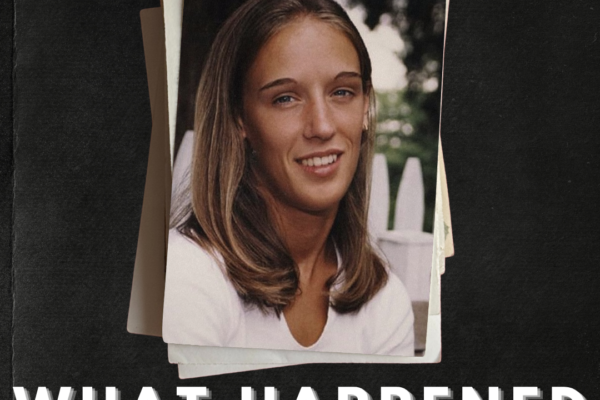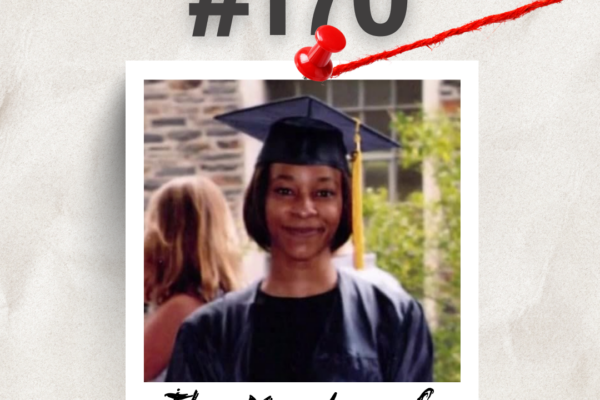
I first shared the story of Nikki McPhatter in the early days of the podcast, in Episode 8. Nikki McPhatter was a 30-year-old woman working in Charlotte at the time of her disappearance. A goal-oriented person who always seemed to know what that next step was, she joined the Navy shortly after graduating from high school. After her time in the military, she took a job as a ticket agent for U.S. Airways at the Charlotte Douglas International Airport.
She was an adventurous young woman who, according to her older sister LaToya, also enjoyed skydiving in her downtime. She turned to online dating hoping to find companionship. It was on a website called Tagged.com that she met Theodore Manning, who was the same age as Nikki and had served time in the U.S. Air Force before taking a job in Columbia, South Carolina. He was also divorced and had a young daughter.
Nikki McPhatter went missing in May 2009. She was driving her 2003 Black Honda Accord. Based on what I’ve read about this case, Nikki had told LaToya about her new relationship, but kept a lot of the details to herself. She did seem disappointed that Theodore, who she called Teddy, seemed to be less interested in a serious relationship and more into playing the field and hooking up with other women as much as possible. After about three months, Nikki had had enough of his behavior. She told LaToya she was making the 90-minute drive to Columbia to get some things from Teddy’s home and tell him she was ending their relationship. She had given him some of her jewelry that he was supposed to have repaired and she wanted it back. LaToya didn’t hear back from Nikki after that.
A Trip to Columbia, S.C.
On May 6, Nikki had called a friend and said she was in Columbia and had run out of gas. Her friend thought this was unusual, because it wasn’t like Nikki, but she didn’t hear anything after that call, so she put it in the back of her mind.
At first, LaToya didn’t worry about not hearing from her sister. She thought maybe Nikki had gone on a trip, as she had done that before because she worked for an airline and could get last-minute tickets at good deals. But then Nikki’s boss called LaToya and told her Nikki hadn’t been to work for almost a week. This was a game changer.
LaToya, who lived outside of Raleigh, grew concerned and reported Nikki missing at the Charlotte-Mecklenburg police department on May 11.
Working jointly, the Charlotte-Mecklenburg Police Department and Investigators with the Richland County Sheriff’s Department immediately suspected foul play. They knew Nikki had left Charlotte and likely had not made it back. They worried something had happened to Nikki during her travels to Columbia.
Investigators knew the first place they needed to start was Theodore Manning, because Nikki had told her sister that’s who she planned to visit. They made a beeline to question him. At first, he tried to downplay his relationship, saying they were “friends with benefits” and nothing else. They took his statement but quietly kept digging.
ATM Video Surveillance Reveals Clues
Their suspicions were heightened when they got a notification that Nikki’s ATM card had been used in South Carolina on May 6. After obtaining video surveillance, they could see a black male using the card seven different times, eventually removing $588 from Nikki’s accounts. During this surveillance they could see him getting into the passenger side of a gold Chevrolet Lumina that was not Nikki’s, and this concerned police even further. They were pretty convinced the man in the video was Theodore Manning.
Investigators obtained a search warrant for Theodore Manning’s home and discovered receipts for cleaning supplies, including bleach, that had been purchased on May 7. He said the cleaning supplies were for another woman he knew, 27-year-old Kendra Goodman. When investigators talked to her, they noticed she drove a gold Chevrolet Lumina, the exact same car that was in the surveillance photo of the man using Nikki’s ATM card. She also tried to tell them that the cleaning supplies were for her, and she knew nothing about Nikki McPhatter. She also shared that she had a casual relationship with Theodore Manning, meaning, she was another one of the women he called “a friend with benefits.”
Investigators weren’t convinced. They pressed on, asking Kendra to take a polygraph test, which she agreed to do without a lawyer. The test showed signs of deception, and when she was pressed further, she began talking. This is what Kendra Goodman said happened.
A Sordid Story
She said that on May 6, Theodore told her to stop by his house. When she arrived, she found him working on a black Honda he said belonged to a friend. Then, he asked her to follow him while he delivered the car back to his friend and give him a ride back home.
They drove to a remote area on Peach Road in Fairfield County, and he asked her to wait in a nearby church parking lot while he continued on down an adjacent dirt road. A few minutes later, she heard a loud explosion. Theodore ran back to her car smelling like gasoline. He claimed he didn’t have anything to do with the explosion she had heard and asked her to take him back to his house.
Kendra said she did not know the car had belonged to Nikki McPhatter, or that she had been missing for that long.
Kendra agreed to cooperate with investigators and led them to the area where she thought Nikki’s car might be. They found a completely charred car, and the skeletal remains of a body in the trunk. The skull showed a clear bullet hold to the back of the head. Dental records later confirmed the remains belonged to Nikki. Kendra said she had no idea the body had been in the back of the car when she followed Theodore to the site.
With this information, investigators went back to Theodore and basically told him to stop lying, and that Kendra had led them to the car and Nikki’s remains.
Theodore Manning was arrested on May 30. Confronted with the evidence, he started talking. He tried to tell investigators, and later his defense attorney, that Nikki had come to visit him when she told her sister. He stressed to her that he was not looking for a serious relationship. After hearing that news, he said she grew enraged, grabbed one of his loaded handguns out of a nearby bag, and started waving it around. He managed to wrestle the gun from and in the process, it went off, killing her instantly.
Investigators with the Richland County Sheriff’s County Department, weren’t so sure about this scenario, as forensics determined Nikki had been shot at point blank range in the back of the head. It didn’t seem like injury that could have occurred during a struggle for the gun. But, they let him keep spinning his version of events.
He said Kendra had helped him clean up the crime scene in his home with the bleach, and knew Nikki’s body was in the trunk of the car when she followed him out to that dirt road in Fairfield County. He also claimed she was the one who told him they should try to get the money out of Nikki’s bank account with her ATM card.
Kendra denied every part of his story, except the part where she followed him when he left the Honda out in the country. She said the bleach they purchased at the grocery store was basic cleaning supplies for their respective homes. She said when she drove him to the ATM, she had no idea whose card he was using. She did admit that later on the evening after they disposed of the car with Nikki’s remains, they had sex at Theodore Manning’s home.
In August 2008, Theodore Manning was charged with criminal domestic violence first-degree. Columbia police said that 10 months earlier, he grabbed a 22-year-old woman around the neck and started choking her. She was a woman he had been living with at the time.
A jury eventually guilty found Theodore “Teddy” Manning guilty of only voluntary manslaughter. He received 30 years behind bars, a sentence which did not sit well with Nikki’s friends and family. Kendra Goodman was found guilty of being an accessory to murder after the fact, and only served a few years in prison in exchange for her testimony against Theodore.
Murder in Salisbury
Episode 35 featured the murder of three people in Salisbury, North Carolina that all resulted from a man obsessed with a woman he loved.
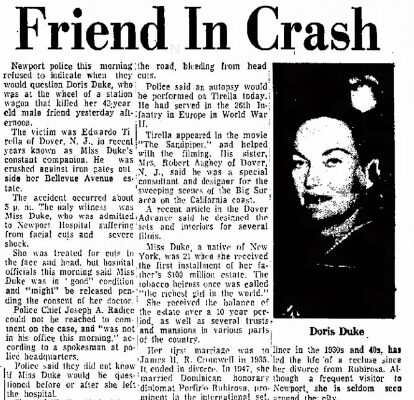
Kay Weden, a native from Salisbury, first met a man named Lamont Claxton (also known as L.C.) Underwood in the summer of 1992 A reporter named Jonathan Weaver covered the story of their relationship in a Jan. 13, 2004 article for The Salisbury Post. Both were divorced, and they hit it off when they met at the home of a mutual acquaintance. Kay worked as a high school teacher and L.C. was working as police officer for the Salisbury Police Department. He had also previously worked in law enforcement at the North Wilkesboro and Newton police departments and the Lincoln County Sheriff’s Department. In the beginning of their relationship, L.C. spared no expense when it came to taking Kay out and buying her gifts. But after dating for only a few months, he proposed marriage in Thanksgiving of that year.
The relationship between the two quickly grew toxic, though. Kay had witnessed a few outbursts from L.C. that made her uncomfortable, and he disagreed with her about the way she was raising her teenage son at the time. They first broke up about a month after getting engaged, but reunited early the next year. L.C. grew more jealous and possessive of Kay. Due to ongoing back issues, he took disability retirement from his job, and the two separated again in March 1993. Kay then received three anonymous typewritten letters mailed from Cleveland, N.C.
The letters threatened her son and spoke of burning Kay’s house down. Through one of these letters, Kay also realized someone had shot into her home, and investigators found a bullet hole in her son’s bedroom, along with a projected spent .22 caliber projectile inside his dresser drawer. Investigators suspected L.C., who was working as a resource officer at Salisbury High School, had created the letters using a typewriter at the school. Kay didn’t want to make any accusations involving L.C. as the culprit, but he was suspended from his position anyway during the investigation. In June of that year, they stopped talking about marriage plans yet again. Kay eventually tried dating other people, but L.C. confronted her while she was out having dinner with another man and dumped iced tea on her lap.
Viktor Gunnarsson Enters the Picture
Now let’s talk about a man named Viktor Gunnarsson. Back on Feb. 28, 1986, Prime Minister Olof Palme was exiting a movie theater on a busy street in Stockholm when he was shot and killed. His wife, Lisbet, sustained injuries during the attack but survived. Because Viktor, known to be a staunch right-wing extremist at the time, was spouting off hate speech about Palme at a nearby bar right before the shooting, Stockholm police detained and questioned him about possible involvement.
Citing lack of evidence, they later dropped charges and released Viktor. Despite claiming innocence, he was not well received in the city after his release. Other extremist groups that had even labeled Palme a “communist” in the past refused to associate with Viktor. He decided to make a clean break and ended up moving to Salisbury, N.C., working as a language tutor and living in modest apartment building in town.
Viktor used this time away from his reputation in Sweden to reinvent himself. He often told women varying stories—that he was an F.B.I. agent or a film director. That’s where he met Kay, and they began dating.
A Murder and a Strange Disappearance
On Friday, Dec. 3, 1993, Kay went out to dinner and Viktor later dropped her off at her home. A few days later, Kay’s mother, 77-year-old Catherine Miller, was found shot to death in her apartment. To investigators, it appeared she must have known who her killer was, because there were no signs of forced entry. When Kay learned of her mother’s death, she was distraught and tried to call Viktor to share the news with him. That’s when she realized no one had been in contact with him and he was reported missing.
Mark Price covered this case for The Charlotte Observer in the summer of 1997. Here’s what readers learned from his reporting.
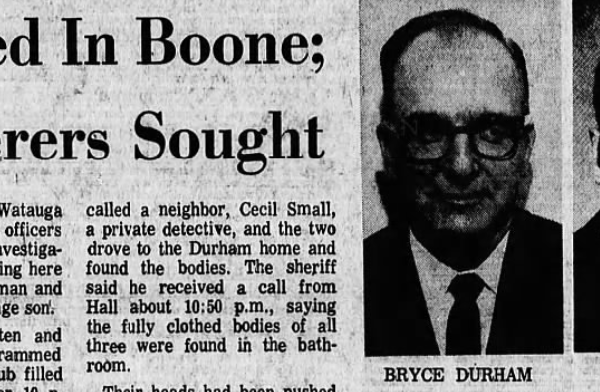
In January 1994, about a month after Viktor Gunnarsson’s disappearance, a land surveyor discovered the nude body of a man buried in the snow in an area called Deep Gap in Watauga County, North Carolina. He wore only a watch and a ring. He had died of two gunshot wounds to the head and neck. Investigators checked the state missing person’s database and suspected the man was Viktor. Fingerprints from Interpol confirmed his identity.
The case was complicated because it involved two different jurisdictions—both Rowan and Watauga Counties. When investigators learned of the crime Viktor was suspected of in Sweden, they wondered if his murder was tied to that case.
But over the next four years, investigators zeroed in on L.C. Underwood. He had phoned a police friend and asked for the registration information on Viktor’s license plate when it was parked at Kay’s house right after the two had started dating.
L.C. also had a history of stalking women when they ended their relationships with him. They matched language found on a typewriter ribbon in L.C.’s house to that series of threatening letters Kay had received after she called things off with Underwood. When investigators searched L.C.’s car, they found it immaculate, but there were sixteen different hairs embedded in the fiber that matched Viktor.
Investigators theorized Underwood abducted Gunnarsson at gunpoint after he left Kay’s house, drove him the 90-plus miles to Deep Gap, shot him in the woods and stripped him of his clothing to destroy evidence. He then drove back to Salisbury and knocked on Catherine’s door, shooting her when she turned her back on him in the apartment. At his trial for Viktor’s murder, prosecutors said L.C. believed if he murdered the two most important people in Kay’s life, she would return to him for comfort.
His defense attorney tried to deflect blame on political enemies from Sweden who had discovered Viktor in the United States, but the jury didn’t buy it. He was convicted in 1997 of the murder and sentenced to life, along with 40 extra years for the charge of kidnapping. He was never tried for Catherine Miller’s murder, but most believed he was responsible, and Kay was spared from sitting through another painful trial. L.C. died of natural causes in Central Prison in Raleigh on Dec. 23, 2018.
As to who murdered Swedish Prime Minister Olof Palme, a man named Christer Pettersson was eventually convicted after Palme’s wife identified him in a police line-up. The conviction was later overturned due to lack of evidence and Pettersson received $50,000 compensation. The case is still open, and over the years, investigators have interviewed 10,000 people in regards to Palme’s death, and 134 different individuals have falsely claimed to be responsible for the crime.
The Crimes of Blanche Taylor Moore
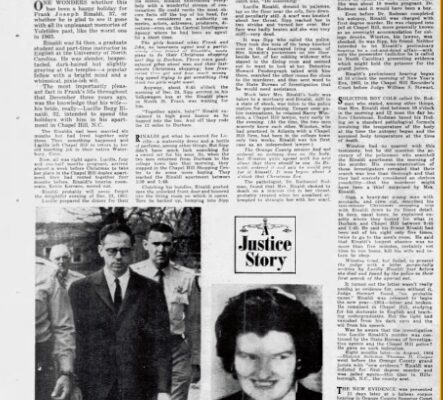
In Ep. 37: North Carolina Women Who Poisoned, I discussed a woman named Blanche Taylor Moore, who romanced men and then once they fell in love with her, caused their slow and painful deaths.
At age 92 Blanche is North Carolina’s oldest death row inmate is 92 years of age.
Blanche Kiser Taylor Moore was born in Concord, North Carolina, married a young man named James Taylor (not the singer) in 1952. They had two children together, and she began a life-long career working as a cashier at the Kroger chain of grocery stores. She began an affair with a man named Raymond Reid, the manager of the store she worked at. In 1973, her husband James passed away from what doctors thought was a heart attack. Blanche and Raymond took their relationship public after Moore’s husband died, but it had numerous ups and downs. In 1985, Blanche supposedly began a relationship with another Kroger manager, Kevin Denton, but eventually she filed a sexual harassment lawsuit against him and Kroger. She settled out of court with Kroger for $275,000 a few years later.
Blanche seemed to present two different sides of herself to the public. Her co-workers at Kroger later described her as crass and lewd, and it’s no secret she liked to pass the time with male co-workers at the store. But she also cultivated a sweet “church lady” persona, attending regular church services around town and always being willing to serve up pie, sweetened iced tea, and banana pudding.
Especially banana pudding.
A New Love in Danger
In April of 1985, while she was still casually dating Raymond Reid, Blanche met Rev. Dwight Moore at a local church. He was smitten with her and clearly had no idea of her troubled past. At the end of May, Raymond Reid was admitted to a hospital in Greensboro for severe nausea and vomiting. His condition worsened and he had to be transported across one town over to Baptist Hospital in Winston-Salem. By September, he began recovering, and Blanche talked him into making her the executor of his estate. Not long after, nurses observed her bringing Raymond treats like milkshakes and banana pudding and feeding it to him.
He died in October of 1986, the origins of his illness remaining a mystery to the doctors. Within a month, Blanche had an engagement ring from the Rev. Moore (I have to wonder—did he even know she was visiting a sick lover in the hospital while they were dating?) Wedding plans were put on hold when Rev. Moore became hospitalized with nausea and vomiting. He overcame his bout of illness and the two were eventually married in April 1987. Rev. Moore was back in the hospital before the honeymoon was even over. Blanche continued to visit him in the hospital and bring him food. His organs began failing, and doctors had an idea to test his blood for heavy metals, because he had recently done some gardening and used insecticides.
The test came back positive for arsenic—Rev. Moore had 100 times the normal amount in his body.
Thus began the unraveling of a most curious web of a black widow. Rev. Moore mentioned to investigators that Blanche had a boyfriend who had died of an unknown illness. Five different bodies were exhumed—those of Raymond Reid, Blanche’s father, her mother-in-law, her first husband, and a co-worker. The male co-worker didn’t have any arsenic in his body, but everyone else did. Raymond Reid’s arsenic levels were 30 times higher than the normal limit.
On July 18, 1989, Blanche Taylor Moore was arrested and charged with the death of Raymond Reid and assault with a deadly weapon in the case of Rev. Moore.
During the trial, Blanche made sure to dress demurely and wear a pair of oversized glasses. Her defense was to “deny, deny, deny.” She denied about having ever brought Raymond Reid or Rev. Moore food in the hospital. She denied ever knowing what the bug poison “Anti-Ant,” was, although witnesses had seen her buy it in hardware stores and she even asked Rev. Moore to buy it for her (he had no clue she’d turn around and poison him with it).
Blanche was convicted to death but had her sentence commuted to life in prison in 2010.
Murder Among the EBCI
I came across a mysterious news item related to the murder of a young Native American woman in Ep. 71: Missing and Murdered Women and Girls in the Eastern Band of Cherokee Indians.
In a 2016 National Institute of Justice Report, the following statistics were published. More than 3 in 5 Native American women have experienced violence in their lifetime, more than half have experienced sexual violence, and the majority have been victims of physical violence at the hands of intimate partners. In some counties, they face murder rates more than 10 times the national average.
One of the frustrating aspects of the Indigenous Peoples community is the lack of media coverage and attention to the victims. This goes back for decades, and it becomes evident quickly when you try and find more research about these cases.
For example, in the Smoky Mountain Times article “Silent No More: Native Communities Call for End to Crisis of Missing and Murdered Indigenous Women,” I saw mention of a young murder victim named Dora Owl from the late 1940s.
What Happened to Dora Owl?
The article stated that the earliest case of a missing and murdered native woman occurred in 1947, when a stranger kidnapped 23-year-old Dora Owl, took her out to Fontana Dam, shot her, and left her for dead. The article quoted her great-grandson, who said Dora did not die immediately, and after a bystander found her on the side of the road, she was taken to the hospital, where she died later from her injuries. The article went on to say that Dora Owl’s case is one of seven on a list of 31 Cherokee women known to have been murdered, gone missing, or died under mysterious circumstances.
An obituary page for Dora Owl online lists her full name as Dora Owl George, born on October 24, 1924 in Birdtown, located in Swain County. However, when I started doing research on this case, I found some interesting information published in what was then called “The Asheville Times.” This was about a crime that took place in 1948, so it looks like the original records were about a year off. The first article ran as a news brief on April 3, 1948. It said a woman was being held by Haywood County authorities in connection with the slaying of 23-year-old Dora Owl. The crime appeared to be the result of a domestic dispute. Here’s the rest of the article, and keep in mind the writing style of newspapers has changed significantly over the years, particularly when reporting about females.
The article stated:
Mrs. Owl, the mother of two small children, died shortly after she was admitted to the Cherokee hospital with a gunshot wound to the abdomen. Mrs. Dock Brock was arrested at her home by Haywood authorities and was to be turned over to Graham county officials. Graham Sheriff J.B. Crisp and Calloway Martin, special agent on the Indian Reservation, said the shooting occurred on Panther Creek near the home of W.M. Roberson. They said their investigation disclosed that Mrs. Brock and another woman whose name was not revealed, accosted Mr. Brock, Mrs. Owl, and another Indian girl parked in a car on Panther Creek Thursday afternoon. Mrs. Brock, they said, opened fire on the car and ordered the two girls into the road. The officers said Mrs. Owl and her companion then walked down the road three-quarters of a mile, and were again approached by Mrs. Brock. This they said, was when Mrs. Owl was shot and fatally wounded.
The other article I found was published in The Asheville Times more than a year later, on September 12, 1949. It was only a few sentences that read:
Mrs. Lyle Brock, about 40, of Robbinsville, was sentenced to five to seven years in State’s Prison for the killing a year ago of Dora Owl, Indian woman, in an argument over a man. Mrs. Brock pleaded guilty to a charge of manslaughter.
I think part of the confusion in the history of this case is that the newspapers often printed initials instead of full names and in this case, we see the name Mrs. Dock Brock and Mrs. Lyle Brock are both used as the person who admitted to shooting Dora Owl. But the Smoky Mountain Times article where I first found mention of Dora’s murder said it was still unsolved. So how do we explain the articles printed in 1948 and 1949 that report on the assault and murder, where Dora died of a fatal gunshot wound to the abdomen? Was the conviction of this mysterious Mrs. Brock overturned at some point and she was released from prison? Or did she never serve time at all? This case is even more interesting because the vast majority of Missing and Murdered Indigenous Women involve domestic violence at the hands of a man, and for this one to have a female perpetrator was a twist I wasn’t expecting. It could also explain how the person responsible for Dora’s death may have gotten out of serving time for the crime, as it was the 1940s.
The Jack Robinson Cold Case from South Carolina
Jack Robinson’s murder that I shared in Episode 87 remains unsolved, and his daughter believes he may have been killed by a scorned lover.
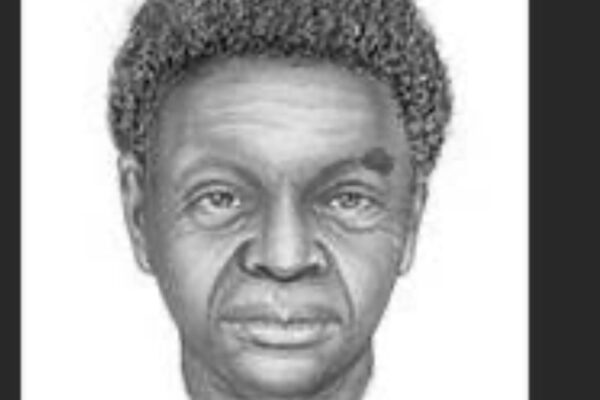
On August 17, 1996, 65-year-old Jack Robinson drove to the Rosewood Boat Landing near the South Carolina State Fairgrounds in his 1991 white four-door Dodge Dynasty. He was seen walking down the boat ramp with a younger man who witnesses described as being a Latino male around five foot ten, one hundred and sixty pounds, with a mustache, wearing sunglasses. The man appeared to be between the ages of 25-35.
Not long after he arrived, witnesses heard the two men begin to argue. Jack told the man he could get him money, and then loudly yelled, “What is it that you want?” Not long after, Jack stumbled out of the woods, having been stabbed multiple times in the stomach and chest. He died from his injuries just a few hours later at a local hospital.
Jack had served in the Air Force for more than 25 years, having enlisted right after he graduated from high school. He served a tour in Vietnam, and after retirement, worked at the Moncrief Army Hospital on Ft. Jackson in the drug dispensary.
His daughter Tammy told the television show “Dateline” her parents eventually divorced, and Jack stayed in Columbia while his daughter and ex-wife moved to Florida. She also told producers that her father had a lifelong obsession with trains, that he had been a great father and grandfather, and that he spent his spare time volunteering in homeless shelters and working on campaigns for the local Democratic party. She said about a year after her father’s murder, she received news that a man charged in another death in the county was a person of interest in her father’s case. A 30-year-old woman and her three-year-old niece were found deceased near the boat ramp where Jack was stabbed. Police suspected the murders could be connected to Jack’s case because the female victim had worked for Jack at one time. Bloodhounds used after Jack’s death had tracked a scent to a business that would later become the murder suspect’s place of employment. While they sought the death penalty for the two murders, the suspect was never charged in Jack Robinson’s murder due to a lack of evidence.
In 2021, on the 25th anniversary of Jack’s murder, his daughter Tammy told a local news affiliate that she believed her father may have been gay, and he could have been murdered in a crime of passion. She is now around the age her father was when he was murdered, and she has worked closely with the Richland County Sheriff’s Department Cold Case Unit to try and drum up leads in the case. She also runs the Justice for Jack Robinson Facebook page.