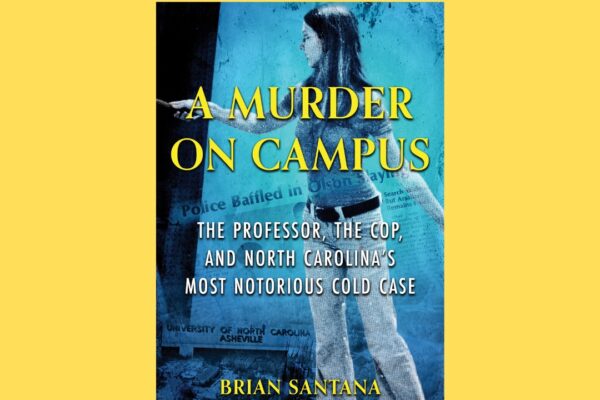
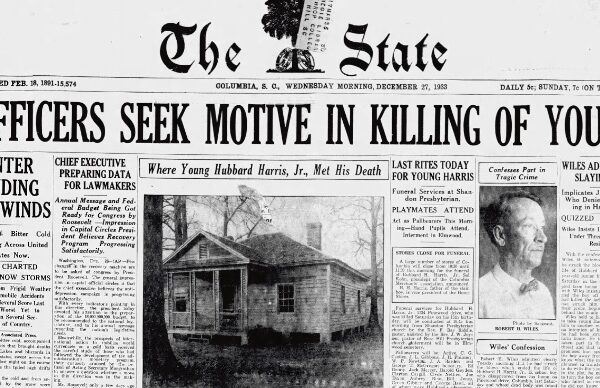
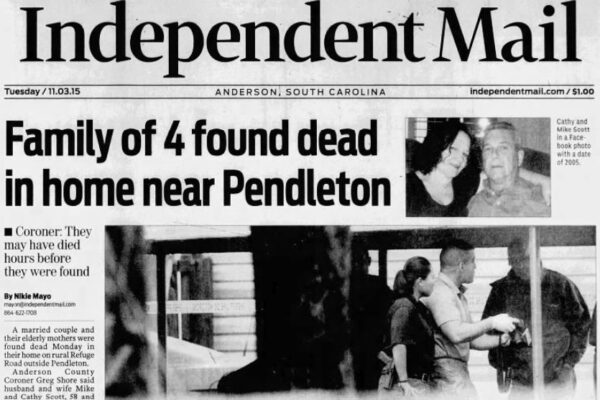
When I attended MurderCon, a conference designed for writers interested in crime, I began developing the concept for this podcast. I’m passionate about covering stories that are often left out of the media, cold cases, and teaching people the importance of situational self-awareness.
I used my curiosity to start up this podcast about missing people in North and South Carolina. At first, I envisioned writing about unsolved cases. Then, the more I started reading and digging into research, I discovered it was also interesting to tell the stories of people who had been missing but maybe had then been found. Was there a mysterious story behind what happened to them? Was their disappearance tied to another case? Now I try to provide a balance of unsolved cases and solved cases.
So, what makes for a compelling true crime story?
True crime is a non-fiction genre of popular media that concerns real-life crimes. A work can focus on either a single case, such as a disappearance, murder, or sexual assault, or the collective acts of a single criminal, such as a serial killer. This genre places emphasis on a timeline of events and presentation of facts. It includes:
- Excellent research
- A chronological timeline that the reader will be able to follow easily
- The exploration of how a cold case was solved
- A twist in the case the reader did not see coming
- The determination involved (by law enforcement, victim or victims’ family members, etc.) in solving a case.
Here are some examples of well-known true crime books.
Author Truman Capote’s 1965 book, “In Cold Blood,” is considered one of the first books that catapulted true crime onto the bestseller lists. The book tells the story of the Clutter family, who lived in Holcomb, Kansas in 1959, when they were murdered by two parolees from the Kansas State Penitentiary named Richard Hickock and Perry Smith, who had heard Herbert Clutter kept a safe full of cash in his home. There was no safe full of cash, but the pair decided not to leave any witnesses behind anyway. They were caught six weeks after the murder. Capote wanted to explore creative storytelling while still presenting the facts of the crime. He traveled to Kansas with his good friend Harper Lee, who later wrote “To Kill a Mockingbird.” Capote met with the investigator on the case and interviewed the two killers, who were later convicted of murdering four members of the Clutter family and sentenced to death.
Ann Rule is probably the most prolific true crime writer from the United States. According to her bio on Simon & Shuster, she wrote 35 books in this genre, including “The Stranger Beside Me,” which chronicled her personal relationship working alongside serial killer Ted Bundy before the world knew how evil he really was. A former Seattle police officer, she got her start writing in the 1970s as a stringer for women’s publications, eventually landing a gig as a freelance writer for True Detective, covering the Pacific Northwest area, where she lived. According to an article that ran on Slate.com, she wrote under a male pseudonym, Andy Stack, and produced two 10,000-word stories per week for 13 years. She was also writing books and raising her four children at the same time.
Writer Michelle McNamara became interested in writing about crime when a murder occurred a few blocks away from her during childhood. She started up a blog called True Crime Diary, where she chronicled hundreds of unsolved crimes. McNamara admitted there was one unknown killer in the 1970s and 1980s from California she became obsessed with—the East Area Rapist, the Original Nightstalker, and finally he became most well-known as the Golden State Killer. She studied his crimes, which included home invasions, sexual assaults, stalking, and murders. McNamara helped link crimes in different geographical areas to the same person. She pitched the idea to L.A. Magazine, and her reporting eventually turned into a book deal for “I’ll Be Gone in the Dark.” HBO eventually produced a documentary series based on McNamara’s work.
When Dr. Benjamin Gilmer, from Asheville, North Carolina, took over a small medical practice, he learned his predecessor had shared the same last name with him. Over time, he learned Dr. Vince Gilmer had confessed to and been convicted of a horrible crime, he had murdered his own father. But when Benjamin began digging into the story, and visiting Vince in a Virginia prison, he became convinced the former doctor was suffering from a medical ailment that may have contributed to his crime. This story first began as a series on NPR’s This American Life, and over time, Dr. Benjamin Gilmer produced the memoir, “The Other Doctor Gilmer: Two Men, A Murder, and an Unlikely Fight for Justice.” In the book, he asks the question, “In a country with the highest incarcerations in the world, what would it look like if we prioritized healing rather than punishment?” You can learn more in Episode 41.
Next, I want to talk about ethics in true crime. This is something I struggle with internally quite often while working on this podcast.
The genre is popular, but is it ethical? Here are some things to consider.
If the same type of victims are shared over and over (i.e., white, female, etc.) it spreads the message that other victims from marginalized communities or from high-risk situations don’t matter.
The popularity of true crime has given rise to the popularity of “citizen sleuths,” fans who frequent social media platforms like Reddit or Tik Tok. These sleuths enjoy discussing ongoing cases, but sometimes they take their sleuthing too far, discussing suspects that haven’t been confirmed by law enforcement, or worse, encouraging people to harass suspects or family members of victims online. There are a group of citizen sleuths depicted in the documentary “They Called Him Mostly Harmless” that could be considered part of this category.
In some instances, true crime content isn’t respectful of the victims and reduces the victims to memes or commodities, and merchandise. Ethical true crime stories are the ones that focus on victims and don’t center the criminal as some cult of personality or mysterious mind to untangle.
It’s importance to have reverence for the victim or victims when writing true crime. When I had the opportunity to interview Leslie Rule, author and daughter of pioneer true crime writer, Ann Rule, I asked her about her thoughts on maintaining integrity while writing in the genre. She said:
“I think the number one thing is you have to be sensitive to the victims. You absolutely have to care about them, and you have to show who they are. That was the most important thing to my mom. And after that, there’s a lot to learn. One of the things true crime authors need to learn are the rules. They can’t write a book about a killer who has not been convicted. They could get sued. They should immerse themselves in information. If they can, they should go to the trial. But then they also need to understand the rules there, because they can vary from trial to trial.”
A few years ago, I wrote a blog post discussing the elements of good true crime writing. I had just read “Before He Wakes,” the book about the murder of Durham resident Russ Stager by Jerry Bledsoe, and “A Tangled Web: A Cyberstalker, a Deadly Obsession, and a Twisting Path to Justice” by Leslie Rule.
“Before He Wakes” is about a woman named Barbara Stager here in my home state of North Carolina who was convicted of murdering her husband Russ while he slept. You can learn more in Episode 53 of Missing in the Carolinas, “Murdered for Money.” She claimed Russ had been sleeping with a loaded gun under his pillow “for safety” and she accidentally shot him early one morning when she went to move the gun. Once police heard from some of the man’s friends and family, they realized this woman had lost her first husband when he “accidentally” shot himself while cleaning a gun. The second book, “A Tangled Web,” covers the case of a woman named Cari Farver, who went missing from Nebraska after spending the night at her new boyfriend’s apartment. After she went missing, Cari appeared to cyberstalk and harass the man, Dave Kroupa, and another woman he’d been seeing named Liz Golyar. This went on for several years, until police realized Liz had murdered Cari and proceeded to impersonate her online, torturing both Cari’s friends, family, and Dave.
Here are three things I feel are important to writing true crime effectively.
Revealing details of the crime without overwhelming the reader. In both these books, there was a lot of information to cover. In “Before He Wakes,” Bledsoe wrote about both of Barbara’s husband’s deaths, her history with both men, interviews with friends and family of the two victims, and the mountain of financial and personal deceptions that were uncovered along the way. “A Tangled Web” had years and years of digital forensics to explain, along with several different overlapping timelines. Both books included the trials, and these aren’t always easy to write about without bogging the readers down.
Motive. In Barbara Stager’s case, she and her second husband had a habit of living beyond their means, but she also hid a lot of purchases and loans from him. Bledsoe did a good job of uncovering Barbara’s many lies, forgeries, and how a loan payment Russ didn’t know about was about to come due right around the time of the shooting. There were also life insurance payouts involved. In the case of Liz Golyar, Rule tracked a pattern of lies and malicious, vindictive behavior, and how she manipulated men to get what she wanted. She became dangerously obsessed with Dave Kroupa, and made the decision that nothing would stand in the way of her relationship to him.
Understanding the psychology of the criminals. I believe this is the main reason readers are drawn to true crime books. In “Before He Wakes,” there was one observation Bledsoe made about Barbara Stager that really stood out to me. Barbara had always been active in her church, as a child and in her marriage to Russ Stager. There were people who didn’t believe she could have been a murderer because of her faith. Bledsoe observed that he believed Barbara had two different compartments to her personality—“the seductress and murderess” and “the church lady” who went overboard in serving in her church to atone for her sins. With Liz Golyar, Rule went so far as to track down member of her family of origin (she had been adopted as a child) and trace the violent roots that were in her past. Could those have contributed to her sociopathic behavior?
Quite often, real crime stories provide the backdrop for fictional projects such as television shows, movies, or novels.
Kevin Williamson, who created the television series “Dawson’s Creek” and the horror franchise, “Scream,” grew up in North Carolina. In the 1980s, when his dad was working as a fisherman, he got caught up in a drug trafficking ring and served time in prison for conspiracy to traffic marijuana in excess of 20,000 pounds. Williamson said his family’s story inspired his new Netflix series “The Waterfront,” which was shot on the coast of North Carolina in Wilmington and Southport. The show features the Buckley family, who run a local fishing business in their small town. Eventually, their business begins to struggle, leading family members to get involved in drug smuggling.
Here are a few novels that were inspired by real crimes stories from around the United States.
Broken Things by Lauren Oliver
Everyone thinks Mia and Brynn killed their best friend. Driven by their obsession with a novel called The Way into Lovelorn the three girls had imagined themselves into the magical world where their fantasies became twisted, even deadly.
The only thing is: they didn’t do it.
On the anniversary of Summer’s death, a seemingly insignificant discovery resurrects the mystery and pulls Mia and Brynn back together once again. But as the lines begin to blur between past and present and fiction and reality, the girls must confront what really happened in the woods all those years ago—no matter how monstrous.
This young adult novel was inspired by the Slender Man stabbing that took place in Wisconsin in 2014, where two 12-year-old girls lured one of their friends, who was also only 12, into the woods in order to murder her.
The Girls by Emma Cline
It’s the 1960s in Northern California and fourteen-year-old loner Evie Boyd is captivated by a group of girls she sees in the park and lured into an unknown cult. Groomed by their charismatic leader, Russell Hadrick, Evie is swept along closer and closer to a violent act she could never have previously imagined.
Inspired by one of the most infamous and disturbing criminals of the late twentieth century, Charles Manson, this is a dark and disturbing story of vulnerability, fear, power and desire.
The Black Dahlia by James Ellroy
It’s Los Angeles in 1947 and the body of a young woman is found brutally murdered, drained of blood and cut in half. Two policemen, obsessed with the Black Dahlia case, as the newspapers have penned it, dig through the dirt of the seedy underbelly of Hollywood to discover the truth of the murdered girl and the dark twists that led to her death.
This neo-noir crime novel is based on the story of Elizabeth Short, a Hollywood hopeful whose murder prompted one of the greatest manhunts in Californian history.
You can find glimpses of true crime stories in my own fictional work.
My short story called “The Polaroid,”which was inspired by the Tara Calico missing persons case from New Mexico.
I wrote “The Monster in the Woods” after reading about the Oklahoma Girl Scout murders.
While visiting the Ringling Museum in Sarasota, Florida, I learned about the Connecticut Ringling Brothers Circus Fire in 1944. I wrote “The Last Circus” the next day.
And many years ago, after seeing a news report on Kyle Fleischmann, who went missing from Charlotte in 2007 after a night out with friends, I wrote a piece of flash fiction called “In the Depths.”
In my suspense novel I’m currently shopping to agents, there’s a storyline featuring the fictional depiction of a religious organization many call a cult here in North Carolina.
Next I want to talk about how I find my ideas for episodes and other true crime articles. This happens in a variety of ways, and I’m always on the lookout for an intriguing story that I think others will be interested in learning about.
- As a person who enjoys walking and jogging outdoors, I remembered a kidnap/murder case of a female runner that happened when I was in college. I then put together an entire episode titled “Missing Runners in North Carolina.”
- After becoming acquainted with a local professor and historian in my area, I interviewed him for an October episode that featured the oldest unsolved murder in our area.
- I plan around National Holidays. For example, November is National Alzheimer’s Disease Awareness Month. For a November ”Missing in the Carolinas” podcast episode, I featured senior citizens who have gone missing in North and South Carolina, and gave an overview of the Silver Alert System.
- I asked author Leslie Rule during an interview how she came to write about the Liz Golyar/Dave Krupka cyberstalking case in Nebraska, which became her book “A Tangled Web.” (This story was also adapted into a Netflix documentary called “Lover Stalker Killer.”)
She said, “I was specifically looking for a case about a female sociopath. Because I think we cannot be warned enough about the dangerous females amongst us. It’s too easy to forget how dangerous a woman can be, and I think that makes them more dangerous. When I set out to find a story, I decided I wanted a love triangle murder because I knew the one thing that brings out the worst in a dangerous female is jealousy.”
What are some of my research methods?
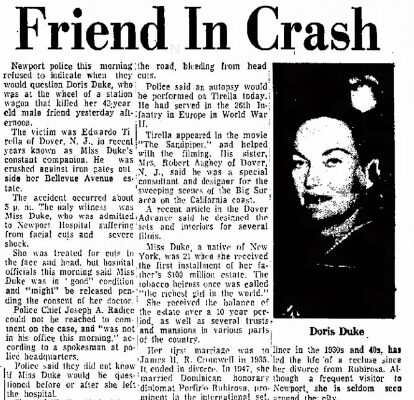
- Newspapers.com™ is the largest online newspaper archive consisting of 933 million+ pages of historical newspapers from 25,100+ newspapers from around the United States and beyond. It is on the pricey side, though, with a monthly subscription costing around $75 every six months.
- Leagle.com- Resource for publicly available court documents.
- The FBI Vault-The Vault is the FBI’s FOIA Library, containing 6,700 documents and other media that have been scanned from paper into digital copies so you can read them in the comfort of your home or office.
- Scribd-Scribd is a digital document library, with more than 170 million documents and counting. You can find and upload text on a variety of topics and niches, including true crime, for the monthly subscription of $11.99.
- InternetArchive.org-Free to use. The Internet Archive, a 501(c)(3) non-profit, is building a digital library of Internet sites and other cultural artifacts in digital form. Like a paper library, they provide free access to researchers, historians, scholars, people with print disabilities, and the general public. Today it features 28+ years of web history accessible through the Wayback Machine.
- FOIA Request
Since 1967, the Freedom of Information Act (FOIA) has provided the public the right to request access to records from any federal agency. It is often described as the law that keeps citizens in the know about their government. Federal agencies are required to disclose any information requested under the FOIA unless it falls under one of nine exemptions which protect interests such as personal privacy, national security, and law enforcement. A FOIA request must be in writing. Most federal agencies now accept FOIA requests electronically, including by web form or e-mail. There are exemptions to these requests, and you can find more information from FOIA.gov.
Here are a few things to consider when researching and writing about true crime. The process can be taxing, stressful, and a strain on your physical and mental health. A prime example of this is the toll all the research Michelle McNamara did took on her mental health, suffering from chronic insomnia. She let the story of the East Area Rapist and the Original Nightstalker consume her life. She died of an accidental overdose of Adderall, Xanax, and Fentanyl before the completion of her ”I’ll Be Gone in the Dark.” Not long after, 72-year-old Joseph D’Angelo was arrested and pled guilty to 13 counts of first-degree murder and special circumstances as well as 13 counts of kidnapping.
But don’t be intimidated when writing true crime. Be as creative as you want while still sticking to the facts. Five years ago, I was working as a regional magazine editor and only dreaming about writing true crime. During the pandemic I decided to take the leap and begin researching and writing on my own and now I have a podcast with almost a hundred episodes and have built an incredible network of advocates, historians, listeners, and other writers.